
















Peru’s Ministry of Production halted the country’s first 2026 anchoveta fishing season on June 11, months earlier than planned, after landings reached only about 470,000 tons against a quota of roughly 1.91 million tons — less than a quarter of what the industry had expected to catch. Because Peru and Chile together supply the bulk of the world’s traded fish meal, the early closure sent the fish meal price 2026 curve sharply upward, with premium grades approaching USD 2,500 per ton in May, up around 79% from a year earlier. If you run or are planning a fish meal plant, this El Niño shock is not just a headline — it changes the math on your margins, your raw material, and your equipment.
What actually happened to supply
Anchoveta is a cold-water forage fish. El Niño warms the Humboldt Current, pushes the stock deeper and farther offshore, and lowers the catch that can be landed economically. When the season was stopped in June, most processors had already committed their drying and reduction capacity for an April-to-August run. The result is a supply gap that cannot be filled by other origins quickly: Norway, Denmark and China’s coastal plants can absorb some demand, but not Peru’s export volume.
This is why the price move is so much larger than a normal seasonal swing. For a refresher on how scarce the supply base actually is, see our breakdown of the seven components of fish meal and why Peru and Chile dominate world trade.
How high prices climbed in 2026
| Grade / reference point | Typical level | 2026 El Niño peak |
|---|---|---|
| Standard steam-dried meal (60–65% protein) | USD 1,400–1,800 / t | approaching USD 2,000+ / t |
| Premium / super-prime (65–70%+ protein) | USD 1,800–2,400 / t | near USD 2,500 / t |
| Change vs. 2025 | — | roughly +79% |
The exact number moves week to week, and we deliberately avoid quoting a single “today” figure that goes stale. The structural point matters more: when a supply shock of this size hits, the spread between a low-protein meal and a high-protein, low-bacteria meal widens. Buyers pay a real premium for quality that holds up. That spread is where a well-run plant earns its money.
Who wins and who gets squeezed
- Operators who process their own catch or bycatch win. If you reduce fish you already own into meal and oil, a higher selling price flows almost entirely to your gross margin. This is exactly the case for coastal and onboard plants that process fresh fish at sea or on the dock.
- Operators who buy raw fish to process get squeezed on input cost, but a fish-meal price surge usually lifts trash-fish and bycatch prices too — so the profit lever shifts to yield recovery and true-protein retention, not to whoever bought the cheapest fish.
- Feed mills substitute at the margin. High fish meal prices make soy concentrate, insect meal and makanan bulu ayam yang dihidrolisis more attractive in poultry and aqua diets — which keeps a floor under demand for alternative-protein processing equipment.
The operational response: protect recovery, not just price
In a high-price year the cost of a badly tuned line is magnified. Every percent of protein you destroy in over-cooking or over-drying is now worth far more than it was last season. Two levers matter most:
- Recover more oil and more solids. Cooking, pressing and separation decide how much fish oil and protein you keep versus send to waste water. Our penekan skru and three-phase fish oil separator target exactly this: higher oil yield plus lower moisture into the dryer, which cuts fuel burn at the same time.
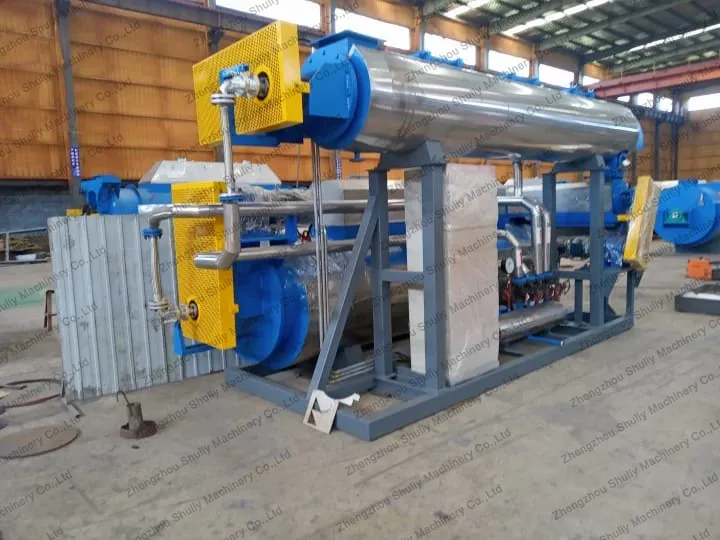
- Cut energy cost per ton. When margins widen, steam becomes a bigger line item. See steam boiler sizing and energy costs for how to size the boiler and switch fuels without bottling capacity.
Is a price spike the right time to invest?
High prices cut both ways. They reward plants that are already running, and they raise the input bill for plants that are just starting. The honest answer is that the strongest time to build is when you can lock in cheap, reliable raw material and let a strong meal price do the rest. Run the numbers against real payback scenarios in our article Is a Fish Meal Plant Profitable? Real Numbers on ROI and Payback Period — it uses plant-level cost data, not optimistic averages.
What to watch next
- The Peruvian B season (typically from November) and whether El Niño conditions persist into it.
- Chilean and Mexican landings, which cushion shortfalls when Peru is closed.
- Chinese port inventories and coastal-district fishing windows, which set the practical price ceiling.
Why did fish meal prices rise so much in 2026?
Peru halted its first 2026 anchoveta season early on June 11 after catch reached only about 470,000 tons against a quota near 1.91 million tons, under 25% of plan. El Niño warming pushed the anchoveta stock out of reach. Because Peru and Chile dominate global fish meal exports, the shortfall lifted premium grades toward USD 2,500 per
ton.
How long will the 2026 fish meal price stay high?
It depends mainly on the Peruvian B season, Chilean and Mexican landings, and Chinese port stocks. Historically, price stays elevated until a normal season rebuilds supply or demand eases. Operators should plan on volatility rather than a fast return to prior-year levels.
Should I start a fish meal plant while prices are high?
High selling prices reward plants already running and raise the raw-fish cost for new
ones. The right move is to secure reliable, low-cost raw material first, then let strong meal prices improve payback. Model it with real plant-level numbers before
committing capital.
How can I protect my margin from price swings?
Maximize oil and protein recovery and lower energy cost per ton. Efficient cooking, pressing, and three-phase separation keep more saleable product and cut fuel, so your margin holds whether fish meal price rises or falls.
Want a plant configuration that protects recovery and cuts energy cost for your raw material and capacity? Tell us your fish species, daily tonnage and budget, and we will size the line for margin that holds through price swings.