


Peru cancelled the 2026 north-central anchoveta second season on October 16, setting a zero quota after surveys found biomass dominated by juveniles. With the first season also underfished, 2026 becomes Peru’s weakest industrial anchoveta year in over a decade.
The decision removes a major fish meal and fish oil supply source, tightening global marine ingredient markets. IFFO expects 2026 fish meal output below 4.6 million tons, the lowest since 2016, while buyers face higher prices, limited Q4 restocks, and greater reliance on alternative origins and substitute proteins.
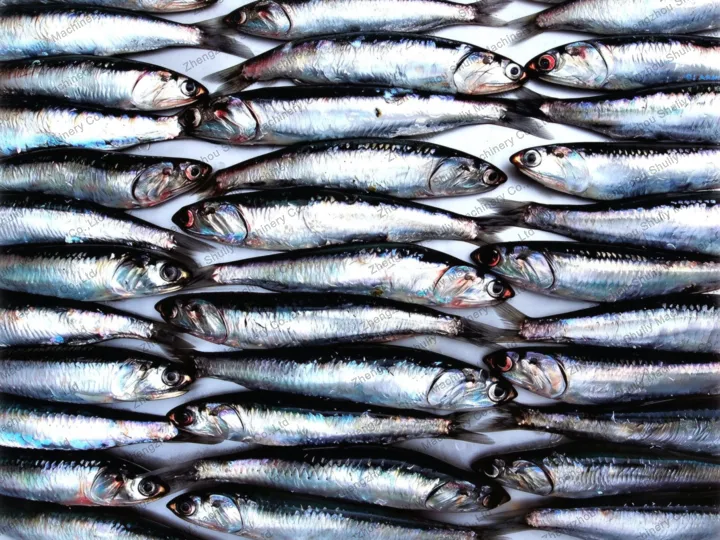
On October 16, 2026, Peru’s Ministry of Production (PRODUCE) confirmed what the market had been pricing in for two weeks: the norte-centro anchoveta zone will close 2026 with no second (B) fishing season at all. There is no reduced anchoveta quota to argue over — the number is zero.
Combined with a first season that executed only 24.6% of its 1.91 million-ton quota, Peru is heading for its weakest industrial year in over a decade, and IFFO now expects global fish meal output below 4.6 million tons in 2026, the lowest since 2016.
For buyers of Peruvian fish meal — and for anyone running or investing in a reduction plant — this decision resets your supply assumptions for the next 12 to 18 months.
What PRODUCE actually decided
- Date: October 16, 2026 — PRODUCE published the closure of the north-central second season after an IMARPE scientific cruise report (Crucero 2609-10) delivered to October 7.
- Scope: the norte-centro zone only. Peru’s southern zone runs a separate regime with its own second season (July–December, 251,000 t quota), which opened July 1 but had landed just 4,347 tons by August 10 before commercial activity paused.
- First season context: opened April 9 under Resolution 000085-2026-PRODUCE with a quota of 1,914,049 t, suspended precautionarily in June and formally closed by Resolution 00285-2026-PRODUCE — 471,000 t landed (24.61%), leaving 1.44 million tons of authorized quota unused.
- Industry warning: the Sociedad Nacional de Pesquería (SNP) stated industrial anchoveta fishing could now stay paralyzed until the 2027 first season — a gap of more than a year.
Why the quota was zero: what IMARPE found
The decision is not a volume problem, it is an age-structure problem. The acoustic survey estimated biomass at 5.12 million tons — a figure that sounds healthy until you see who is swimming in it.
| Indicator (IMARPE cruise 2609-10, data to Oct 7, 2026) | Value | vs. reference |
|---|---|---|
| Acoustic biomass, norte-centro | 5.12 million t | -27.9% vs. summer 2026; -22.8% vs. 1996–2025 winter-spring average |
| Juveniles, by number | 79% | 65% of biomass by weight — fish not yet in the spawning stock |
| Reproductive activity | Below historical pattern | Spawning episodes persist only between Chimbote and Pisco |
| Ocean conditions | Warm anomalies | Schools closer to shore, shifted south, held at greater depth |
| Oil content of fish | Below 1% (MSICeres) | Fish are lean — meal yield OK, but oil yield structurally lower |
When roughly four out of five fish are juveniles, opening a commercial season means harvesting the stock that is supposed to rebuild the fishery. PRODUCE took the precautionary route — Vice-minister Jesús Barrientos framed it explicitly as preserving the resource for coming seasons. Note the second-order effect: biomass exists, but quota is a biological permission, not a headcount. That distinction is why “5.12 million tons in the sea” does not translate into a single ton of 2026 B-season meal.
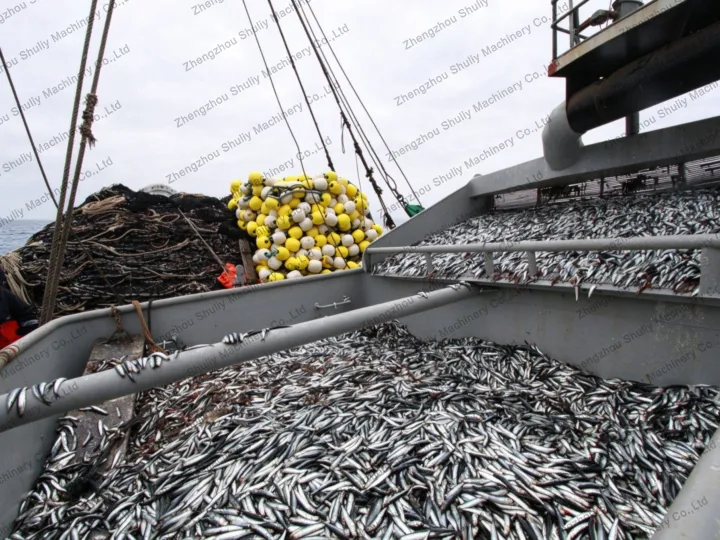
The 2026 anchoveta quota scoreboard
| Season / zone | 2026 quota | Status |
|---|---|---|
| Norte-centro, first season (from Apr 9) | 1,914,049 t | Closed early in June; 471,000 t landed (24.61%) |
| Norte-centro, second season (B) | 0 t — cancelled Oct 16 | No industrial campaign in 2026 |
| South zone, second season (Jul–Dec) | 251,000 t | Opened Jul 1; 4,347 t by Aug 10, then paused |
| Direct human consumption (whole coast, 2026) | 75,000 t | Artisanal / small-scale only |
| Reference: Chile 2026 anchoveta quota | 625,000 t | Cut 44% year-on-year |
For scale: the 2025 norte-centro B season landed about 1.6 million tons at 98% quota completion, producing roughly 380,000 tons of fish meal. The 2026 B season delivers none of it. Peru supplies about 20% of global marine ingredient output in a normal year (IFFO), and the norte-centro zone alone is roughly 20% of world fish meal and fish oil raw material — so a zero B season is a direct, permanent hole in the 2026/27 balance sheet, not a weather delay.
What it means for fish meal buyers
- No Q4 restock from Peru. Contract negotiations for November–February delivery now have to be filled from current cargo, Chile, India, Vietnam or Indonesia. Chinese traders were already shifting to Indian and Vietnamese volumes before the announcement.
- The price move arrived first. Shanghai super prime (68% protein) traded at CNY 24,000–25,000/t on October 15 — a day before the official cancellation — while port inventory of imported meal fell to 120,500 t (Mysteel, Oct 15), down 4.97% in one week. The resolution confirmed the scarcity; it did not create it.
- Fish oil is the tighter market. Low oil content (below 1% in current landings) means oil tons are lost twice: fewer fish, and less fat per fish. FAO put animal-feed grade fish oil at USD 4,100/t, up 64% year-on-year. If your formulation depends on EPA/DHA, secure it separately from meal.
- Expect quality-tier spread to widen. In a short year, the gap between standard 65% and super-prime 68%+ meal grows — buyers pay more to protect digestible protein and low bacterial counts, as covered in our El Niño price analysis.
- Substitution becomes structural, not tactical. Insect meal, hydrolyzed feather meal and soy concentrate move from “alternative” to “planned input” in poultry and aqua diets — see the hydrolyzed feather meal line and mealworm separator for the equipment side of that shift.
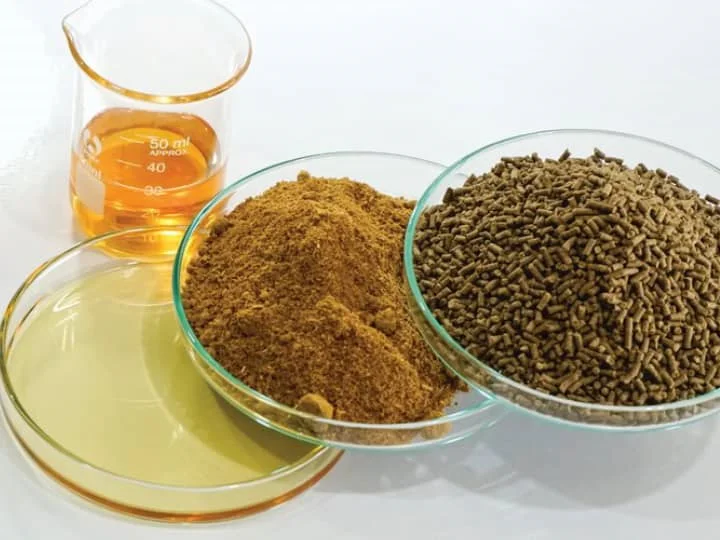
Where prices stand after the announcement
| Reference | Level | Change / date |
|---|---|---|
| IMF: Peru 65% protein meal, CIF | USD 2,950.79 / t | +89.2% YoY (Sep 2026 vs Sep 2025) |
| FAO: Peru super prime, FOB | USD 2,500 / t | ~+79% YoY (May 2026 vs ~USD 1,400) |
| Peru super steam pre-sale, CNF China | USD 3,450 / t | Flat, no saleable stock (Oct 20, 2026) |
| Shanghai super prime, spot | CNY 24,000–25,000 / t | Set before Oct 16 announcement |
| Chinese port inventory, imported meal | 120,500 t | -4.97% w/w (Oct 15, 2026) |
IFFO’s October 5 projection puts 2026 global fish meal below 4.6 million tons and fish oil near 1.15 million tons — both the lowest since 2016. Across IFFO’s reporting sample (about 40% of world meal output), cumulative production through August was down 45% year-on-year, with fish oil down 26%.
What to watch next
- Whether the southern B season restarts — its 251,000 t quota is still mostly unexecuted, but only 4,347 t had landed by mid-August.
- IMARPE’s next biomass survey (winter-spring 2026/27) — the reading that decides whether a 2027 first season opens on schedule. One European distributor told UCN the industry question is no longer “this year” but “can the 2027 season 1 open?”
- Chile’s reduced 625,000 t fishery and North Atlantic raw material restrictions, which limit how far other origins can backfill.
- Chinese buying behavior — 999,000 t of Peruvian meal imported in 2025 (78% of Peru’s exports, ~half of China’s imports, FAO). Whether China accepts Indian/Vietnamese substitution at scale sets the clearing price for everyone else.
What it means if you run a plant
Buyers feel the price; operators can act on it. Two levers matter most in a zero-quota year.
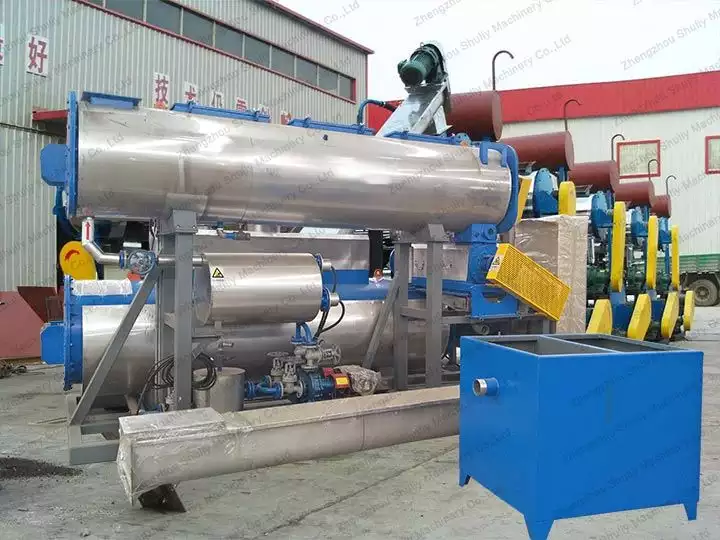
First, yield recovery — with raw fish getting more expensive and leaner, every point of oil and protein you keep out of the waste water is worth more: that is the job of the Presse à vis and three-phase fish oil separator.
Second, raw material independence — plants that process their own catch or bycatch (coastal or onboard) capture the higher selling price instead of paying it.
If you are modeling a new line against today’s input costs, run the payback numbers in our ROI article — it uses plant-level data, not averages. For background on what drives fish meal composition and value, start with the seven components of fish meal.
Did Peru set a 2026 second-season anchoveta quota?
No. On October 16, 2026, PRODUCE cancelled the norte-centro second (B) anchoveta
season outright – the quota is zero. The decision followed an IMARPE survey showing 5.12 million tons of biomass but 79% juveniles by number. Only the southern zone retains a separate 251,000 ton second-season quota for July through
December.
How does the cancelled B season affect fish meal supply?
The 2025 norte-centro B season produced about 1.6 million tons of fish and roughly 380,000 tons of fish meal at 98% quota use. The 2026 B season produces none. IFFO projects global 2026 fish meal output below 4.6 million tons – the lowest since 2016 – with fish oil near 1.15 million tons.
Will fish meal prices rise further after the announcement?
Much of the move was already priced in: Shanghai super prime reached CNY 24,000-
25,000 per ton on October 15, a day before the confirmation, and IMF data shows Peru 65% protein meal at USD 2,950.79 per ton CIF in September 2026, up 89.2% year-on-year. Further upside now depends on the 2027 first-season outlook and
Chinese inventory drawdown.
What should feed mills and buyers do now?
Lock volumes for the November-February window before replacement costs move,
treat fish oil as a separate sourcing decision because oil is tighter than meal, and
formalize substitute proteins – insect meal, hydrolyzed feather meal, soy
concentrate – with nutritional validation instead of ad-hoc substitution.
Diversifying origin (India, Vietnam, Chile) reduces dependence on Peruvian cargo.
Planning capacity or line upgrades while supply is tight? Tell us your raw material, daily tonnage and target meal protein — we will size a Ligne de traitement de la farine de poisson around the material you can actually secure.