
















El proceso de producción de harina de pescado generalmente incluye los siguientes pasos: trituración, cocción, extrusión, secado, molienda, tamizado y envasado. Cada paso se describe en detalle a continuación.
Paso 1: triturar pescado
In the whole fish meal production process, the first step is to shred fish if the raw materials are more than 10cm. the fresh fish are fed into a crusher after pretreatment such as cleaning and scaling. The pulverizador completely crushes the fish into fine particles for subsequent processing and extraction.
Paso 2: cocinar pescado desmenuzado
Después del desmenuzado, alimenta estas materias primas a la máquina de cocción a alta temperatura. El propósito del vapor es destruir las enzimas y microorganismos en el pescado, así como desnaturalizar las proteínas del pescado para una mejor extracción y curado.
Paso 3: extrusión
The steamed fish material is fed into the extruder. The fish extruder machine, by means of mechanical force and temperature control, squeezes the fish material into a solid shape while allowing the water and oil to escape. The press liquor produced in this process can be used to extract fish oil.
Por el aceite de pescado, también puedes usar la máquina de separación de aceite de pescado para la extracción de aceite de pescado.
Paso 4: secado
After that, it is processed by drying it in a fish meal drying machine. The purpose of drying is to remove the water from the fish pieces and turn them into dry fishmeal. By controlling the drying temperature and time, the quality and nutritional value of fishmeal can be ensured.
Paso 5: tamizado
The dried fishmeal is graded and sieved through fishmeal sieving equipment. The purpose of sieving is to divide the fishmeal particles into different grades according to different particle sizes to meet the needs of different fields.
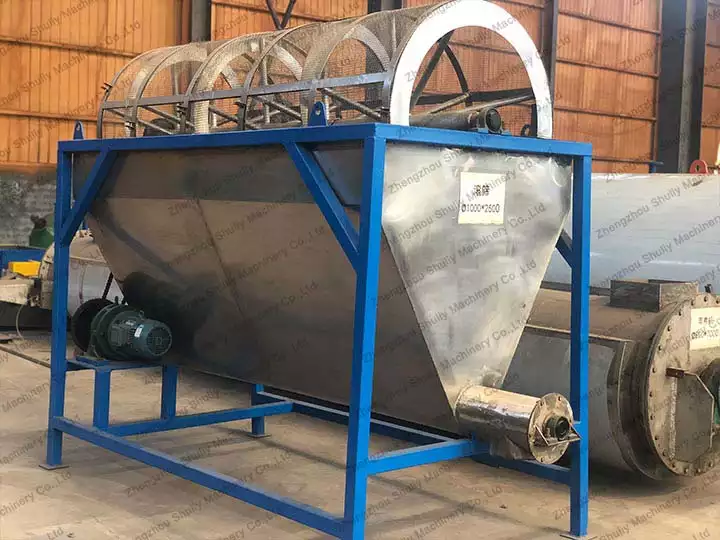
Paso 6: molienda
After screening, the harina de pescado is fed into the mill for further fine grinding. The purpose of grinding is to make the fishmeal particles finer and more uniform, increase their solubility and digestibility, and improve the utilization rate of feed.
Paso 7: envasado
Durante el proceso de producción de harina de pescado, el último paso es envasar. La harina molida se envía a la máquina de envasado para su empaquetado. Normalmente se utilizan bolsas o contenedores para garantizar la conservación y seguridad en el transporte de la harina de pescado.
En general, el proceso de producción de harina de pescado se muestra como arriba, y si estás interesado, ¡bienvenido a contactarnos para más detalles!